What is a total knee replacement?
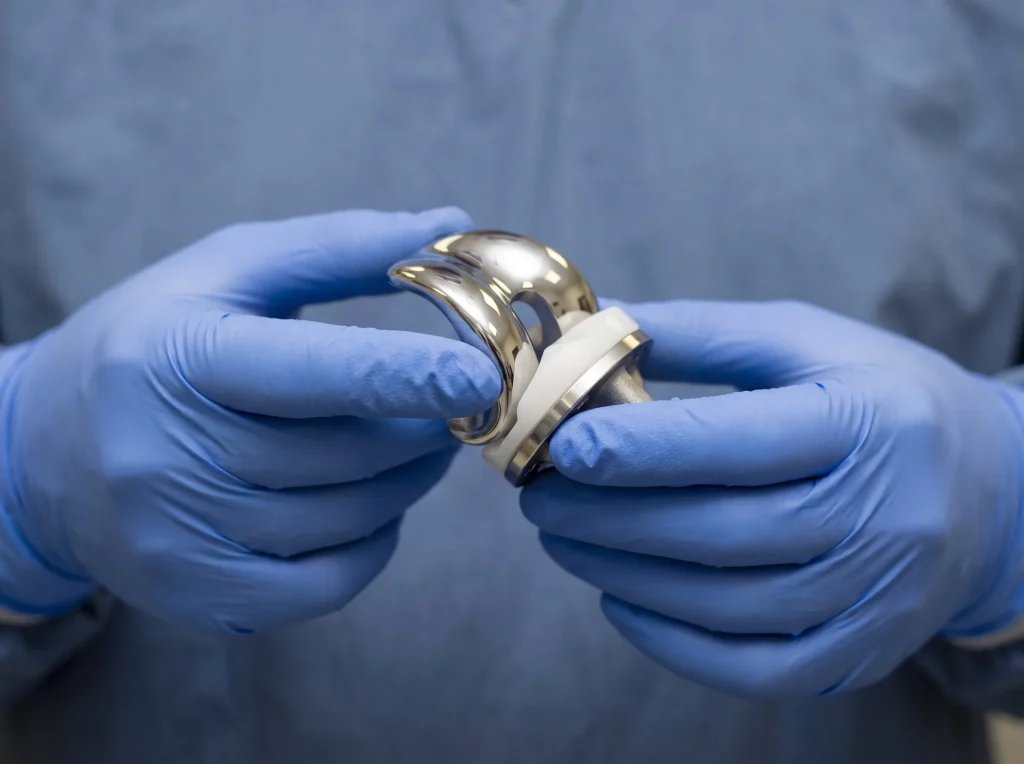
In a total knee replacement, the damaged surfaces of the knee joint are removed and replaced with metal components, with a smooth plastic spacer between them. The new surfaces glide against each other, so the knee can bend and straighten with less pain.
It is one of the most common joint operations in the UK. For people whose arthritis affects only one part of the knee, a partial knee replacement may be an alternative.
When do symptoms need urgent help?
| Your symptom | Possible cause | What to do |
|---|---|---|
| Hot, red, swollen knee with fever | Possible infection | Contact the hospital or call 111 the same day |
| Painful, swollen calf or sudden breathlessness | Possible blood clot | Call 999 or go to A&E |
| Sudden severe pain after a fall | Possible fracture | Go to A&E or call 111 |
For anything else, contact the hospital or your GP. NHS 111 is available 24 hours a day.
Conditions a knee replacement treats
Osteoarthritis: the most common reason for a knee replacement
Inflammatory arthritis: such as rheumatoid arthritis affecting the knee
Arthritis after injury: wear that develops years after a fracture or ligament injury
Treatment options
Surgery is one option, never the only one. Mr Reddy will talk you through each of these.
Exercise and physiotherapy
Strengthening the muscles around the knee often reduces pain and improves function.
Pain relief and injections
Simple painkillers and steroid injections can ease flare-ups, though the benefit from injections is often temporary.
Partial knee replacement
If arthritis affects only one part of the knee and the ligaments are healthy, replacing that part alone may be possible.
Total knee replacement
When arthritis affects more than one part of the knee and pain limits daily life.
Total or partial knee replacement — or neither?
| Compare | Non-surgical care | Partial knee | Total knee |
|---|---|---|---|
| Best suited to | Mild to moderate symptoms | Arthritis in one part of the knee | Arthritis in more than one part |
| Hospital stay | None | Usually one to two nights | Usually one to three nights |
| Recovery | Ongoing | Often quicker | Several months |
Why patients choose Mr Reddy
Explains every option: non-surgical treatment is always discussed first
One surgeon throughout: from your first consultation to your final follow-up
NHS consultant: Trauma & Orthopaedics, University Hospitals of Morecambe Bay
Verified patient feedback: rated 5.0 on iWantGreatCare from 16 reviews
Before your knee replacement
Pre-operative assessment: a health check, blood tests and advice on your medicines
Prepare your home: clear walkways, raise chairs and plan help for the first weeks
Prehabilitation: exercises before surgery can help your recovery
What happens on the day
Step 1
Admission
You are welcomed, checked and seen by Mr Reddy and the anaesthetist
Step 2
Surgery
Usually one to two hours
Step 3
Recovery
You wake on the ward and start moving with a physiotherapist, usually the next day
Recovery, risks and results
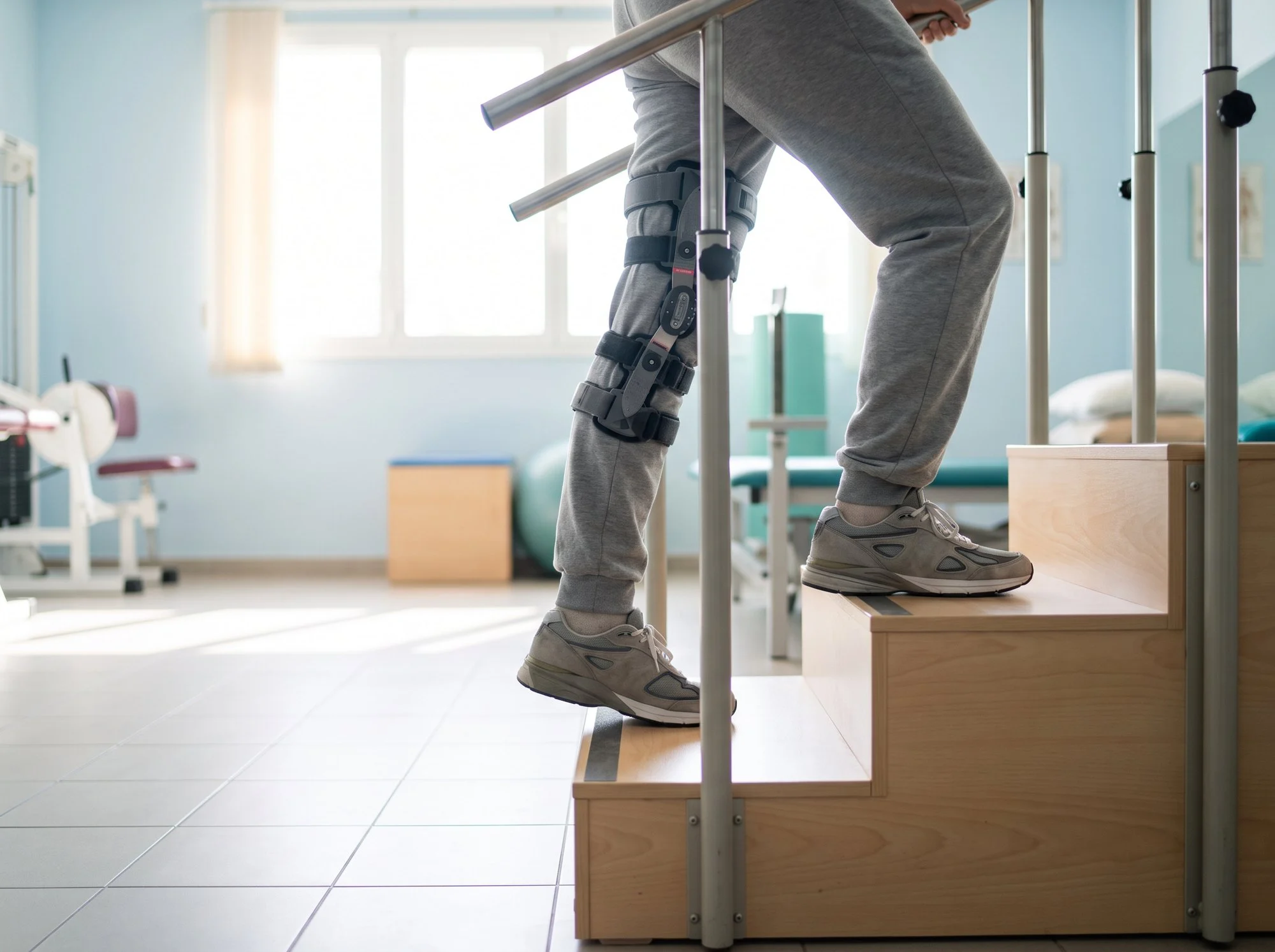
Most people walk with a frame or crutches at first and move to a stick over the following weeks. Swelling and stiffness settle gradually, and improvement continues for several months.
As with any operation there are risks, which Mr Reddy will discuss with you, including infection, blood clots, stiffness, ongoing pain and, rarely, the need for further surgery.
Getting back to the things you enjoy
Many people return to walking, swimming, cycling and golf once their knee has recovered. Mr Reddy will give you a rehabilitation plan based on the activities that matter to you.